
Highlight 24/2026: Micro, small and medium-sized enterprises and climate disasters – why small firms need stronger social protection in disaster governance
Hassan Fahs, 22 July 2026
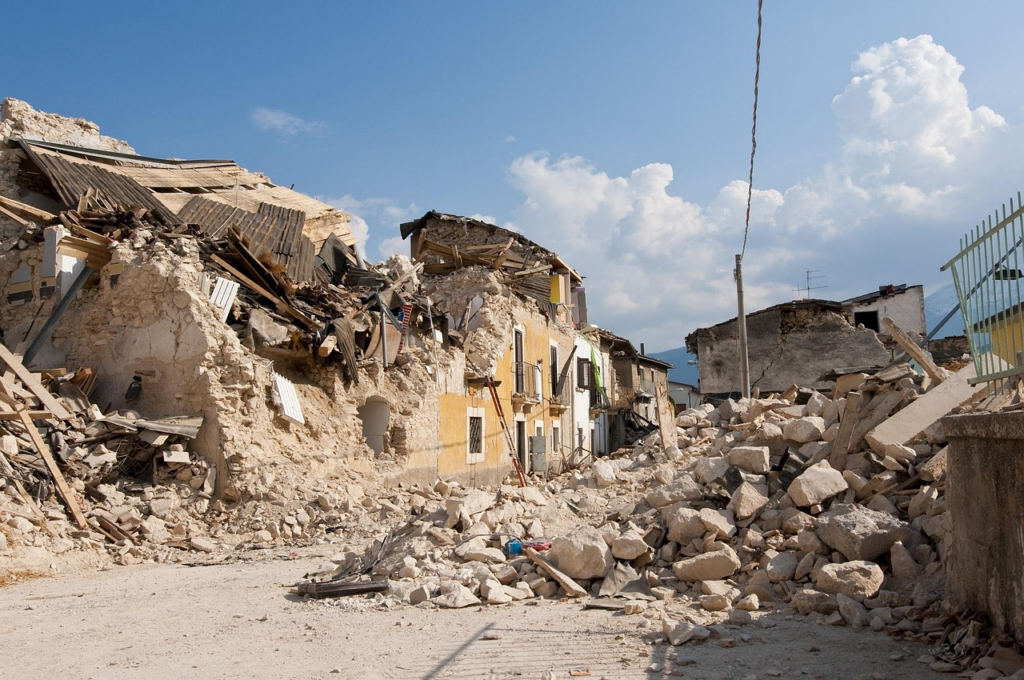
Micro, small and medium-sized enterprises account for more than 90% of firms and around 70% of employment worldwide, yet climate-disaster governance still tracks households, infrastructure, and sovereign losses more closely than local firms. This policy gap matters because emissions are concentrated elsewhere: Carbon Majors reports that just 32 fossil-fuel and cement producers were linked to more than half of global fossil and cement CO₂ emissions in 2024, while most MSMEs have limited emissions on a per-firm basis. The core debate is not simply that MSMEs are vulnerable to climate disasters, but that their vulnerability is rarely treated as a public governance issue.
When shocks hit, the smaller player often carries the heavier burden. UNDRR notes that 40–60% of SMEs do not recover after disaster, and the World Bank argues that relocation may be feasible for larger firms but that many small firms affected by climate shocks simply go out of business. The asymmetry is not only economic, but also institutional. Larger corporations are better positioned to access regulators and industry platforms, shaping whose risks are prioritized in adaptation and reconstruction debates. MSMEs, by contrast, are numerous but fragmented, and their losses are often treated as a private business problem rather than a broader governance concern.
The protection gap sits at the centre of this imbalance. The World Bank estimates a global natural-catastrophe insurance protection gap of 62% in 2023, and reports that the gap exceeds 90% on average in developing countries. Because many MSMEs operate informally, they are also less likely to benefit from contributory insurance, business interruption cover, and formal safety nets. The result is double exposure: low capacity to absorb losses before disaster, and weak recovery capacity after it. That is why a flood, heatwave, or prolonged blackout can become not only a business shock, but also a labour-market and livelihood shock.
The impacts within the MSME sector are also uneven. Climate shocks can trigger temporary suspension, permanent closure, layoffs, unpaid wages, and loss of inventory or productive tools. Microenterprises that rely on daily turnover are especially exposed, and informal workers lose income immediately when the business stops. Women-owned businesses face an added liquidity constraint: they represent 23% of MSMEs globally but account for 32% of the global MSME finance gap, weakening their ability to self-insure and recover. In fragile and refugee-hosting settings, refugee micro-businesses can be even more exposed because their survival depends heavily on already-stressed local markets and host-community enterprises.
Public policies should therefore treat MSME resilience as part of social protection and local economic recovery, not as a niche private-sector issue. Priority measures are clear: pre-arranged disaster risk finance for small firms, affordable microinsurance and parametric insurance, rapid recovery grants after shocks, municipal support for business continuity planning and crisis simulations, and explicit inclusion of MSMEs in national adaptation plans.
A serious climate-governance agenda should also target support toward women-led, informal, and climate-exposed microenterprises, because resilience is weakest where loss can most easily become destitution. If climate policy protects physical assets but lets local firms fail, it will miss the social reality of disaster recovery.
Hassan Fahs, Highlight 24/2026: Micro, small and medium-sized enterprises and climate disasters – why small firms need stronger social protection in disaster governance, 22 July 2026, available at www.meig.ch
The views expressed in the MEIG Highlights are personal to the authors and neither reflect the positions of the MEIG Programme nor those of the University of Geneva