
Highlight 23/2026: Youth as Stakeholders in Security Sector Governance: Insights from Nepal and Sri Lanka
Keya Pattavi, 16 July 2026
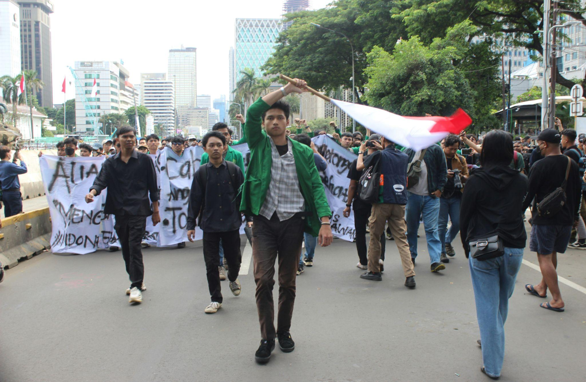
Youth are increasingly recognised as critical stakeholders in security sector governance (SSG), particularly in societies undergoing political transition or facing governance deficits. Their inclusion is not merely normative but strategic: young people represent both a significant demographic constituency and a source of innovation, accountability, and long-term stability. The cases of Nepal and Sri Lanka illustrate how youth engagement can shape, challenge, and reimagine security governance, albeit within distinct political environments.
Nepal’s post-conflict trajectory provides a notable example of relatively institutionalised youth participation in SSG. Following the 2006 Comprehensive Peace Agreement, the country embarked on an ambitious process of security sector reform, including the integration of former Maoist combatants and the restructuring of civil-military relations. Youth actors, particularly student unions, politically affiliated youth wings, and civil society organisations, played a visible role in these processes. They contributed to public discourse on constitutional reform, advocated for inclusive representation within security institutions, and pushed for greater transparency and accountability. This engagement was facilitated by an expanded civic space and a broader democratization process. However, the Nepalese case also highlights a critical limitation: youth participation is often mediated through political party structures, raising concerns about co-optation and the erosion of independent civic agency.
Sri Lanka presents a contrasting yet instructive case for understanding youth engagement in SSG in the aftermath of prolonged armed conflict. Following the end of the civil war in 2009, the country faced the immense challenge of post-war reconciliation, transitional justice, and the reform of a security apparatus shaped by nearly three decades of counter-insurgency operations. Youth, including former combatants, displaced young people, and civil society activists, emerged as important actors navigating this landscape. In the north and east, Tamil youth organisations engaged in advocacy around demilitarisation, land rights, and accountability for wartime abuses, often operating under conditions of surveillance and institutional suspicion. Meanwhile, Sinhalese and Muslim youth groups have increasingly participated in inter-communal dialogue initiatives supported by national and international civil society organisations, seeking to reshape narratives around security and coexistence. The 2022 Aragalaya (« struggle ») movement, a largely youth-driven uprising demanding governmental accountability and systemic reform, further demonstrated the capacity of young Sri Lankans to challenge entrenched power structures, including those underpinning the security sector. While the movement was primarily economic in its immediate triggers, its demands for institutional accountability and anti-corruption measures carried clear implications for security governance.
A comparative reading of Nepal and Sri Lanka highlights that the nature and impact of youth engagement in SSG are profoundly shaped by the political context. Where institutional openness exists, as in Nepal, youth can participate more directly in reform processes, though not without risks of politicisation. Where the legacies of conflict and ethnic polarisation constrain civic space, as in Sri Lanka, youth engagement tends to be more fragmented across community lines, yet no less significant in pressing for accountability and reform. Yet in both cases, youth serve as important agents of scrutiny and pressure, challenging entrenched power structures and advocating for more responsive governance.
For youth engagement in SSG to be meaningful and sustainable, it must move beyond symbolic inclusion. This requires deliberate investment in youth capacity-building, access to information, and the creation of institutional mechanisms that facilitate dialogue between young citizens and security actors. International partners and national governments alike have a crucial role to play in supporting independent youth platforms and integrating participatory practices into governance frameworks, particularly in post-conflict settings where trust between communities and security institutions remains fragile.
Ultimately, the experiences of Nepal and Sri Lanka demonstrate that youth are not peripheral to security sector governance but central to its legitimacy and effectiveness. Harnessing their potential requires not only opening spaces for participation but ensuring that such participation translates into tangible influence over policy and practice.
Keya Pattavi, Highlight 23/2026: Youth as Stakeholders in Security Sector Governance: Insights from Nepal and Sri Lanka, 16 July 2026, available at www.meig.ch
The views expressed in the MEIG Highlights are personal to the authors and neither reflect the positions of the MEIG Programme nor those of the University of Geneva