
Highlight 26/2026: Climate Justice: Are Developing Countries Adequately Protected?
Arnold Ateka, 11 August 2026
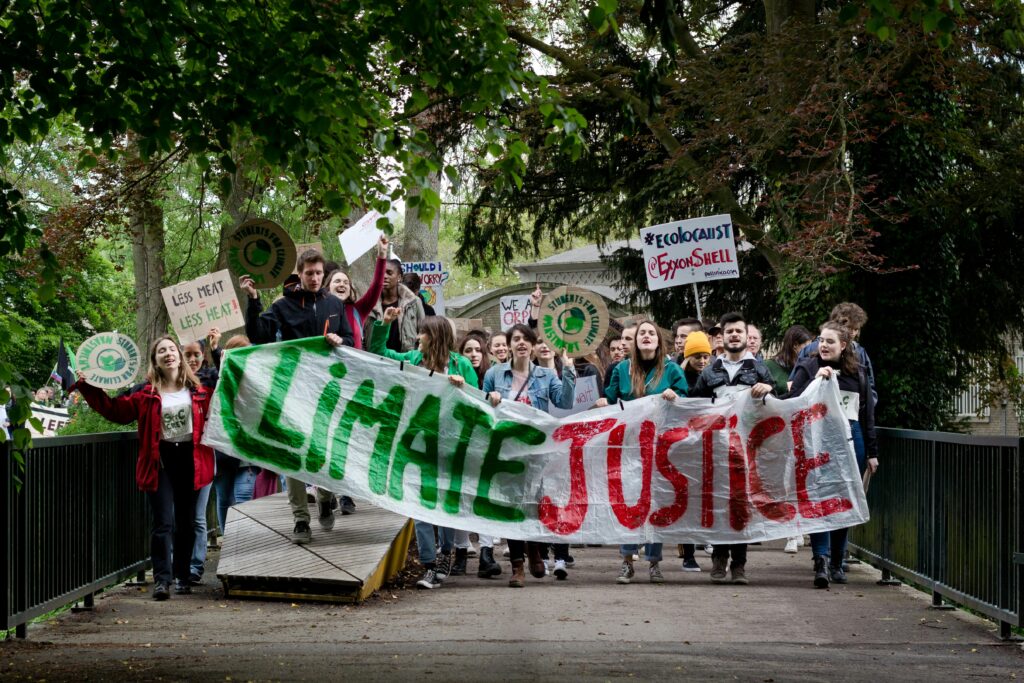
Climate justice concerns the equitable distribution of climate burdens, responsibilities, and remedial obligations across states with profoundly unequal historical contributions to greenhouse gas emissions and highly differentiated capacities to respond. Developing countries are disproportionately exposed to droughts, floods, heat stress, sea-level rise, and food insecurity, yet their cumulative contribution to the climate crisis remains comparatively minimal. On normative grounds, this asymmetry makes a compelling case for stronger support from industrialized states. In principle, this obligation is reflected in the architecture of international climate law; in practice, however, the current regime remains insufficient to secure meaningful protection for vulnerable countries.
A key achievement of climate justice discourse is that it codifies the principle of differentiated responsibility. The Paris Agreement, together with the broader climate justice framework advanced in international human rights and environmental governance, acknowledges that developed states bear a particular duty to provide climate finance, technology transfer, and capacity-building assistance. This is not merely a matter of distributive fairness but also of corrective justice, since those with the greatest historical responsibility for emissions are expected to contribute most substantially to adaptation and mitigation efforts elsewhere. The growing institutional recognition of loss and damage further strengthens this logic by affirming that some climate harms exceed the limits of adaptation and therefore require dedicated redress.
One of the most persistent weaknesses of the current climate systems is the inadequacy, unpredictability, and conditionality of climate finance. The practical delivery of support remains delayed, fragmented, and often mediated through financial instruments that do not fully correspond to the needs of recipient states. In particular, the prevalence of loans rather than grants raises serious concerns, because debt-financed climate action can exacerbate fiscal vulnerability in countries that are already constrained by limited revenue bases, external indebtedness, and development deficits. Under such conditions, climate finance risks reproducing the very inequalities it purports to address. The OECD data on climate finance make clear that aggregate figures alone cannot resolve the deeper question of justice, because the composition, accessibility, and concessionally of finance matter as much as the headline totals.
The distributive imbalance becomes even more pronounced when attention shifts to the most vulnerable states. Small island developing states, least developed countries, and low-income countries bear some of the gravest climate risks, yet they do not consistently receive financing commensurate with their exposure and needs. The establishment of the loss-and-damage fund is an important institutional advance, but it remains politically fragile and financially underpowered relative to the scale of the losses already being incurred. Its reliance on voluntary contributions underscores a structural limitation: the global response continues to depend excessively on political goodwill rather than binding obligation. As a result, the current climate regime offers recognition without adequate remedy.
The recent ICJ advisory opinion has improved the legal and diplomatic standing of African countries by elevating climate responsibility from a political aspiration to a question of international legal obligation. This matters because African states occupy a particularly vulnerable position: they face severe climate impacts while possessing limited leverage in multilateral negotiations. It also provides a more authoritative basis for demands related to adaptation finance, loss and damage, and more equitable climate governance.
Developing countries are not yet adequately protected under the current climate justice regime. Although the legal framework has become more advanced and the normative case for support is now widely accepted, implementation remains too uneven, too debt-oriented, and too dependent on voluntary commitments. Nevertheless, meaningful protection will require not only stronger legal principles but also predictable grant-based finance, robust institutional enforcement, and a genuine commitment to reparative justice.
Arnold Ateka, Highlight 26/2026: Climate Justice: Are Developing Countries Adequately Protected?, 11 August 2026, available at www.meig.ch
The views expressed in the MEIG Highlights are personal to the authors and neither reflect the positions of the MEIG Programme nor those of the University of Geneva