
Highlight 20/2026: Can Pushbacks Ever Be Justified Under International Law?
Jaber Hayder, 22 June 2026
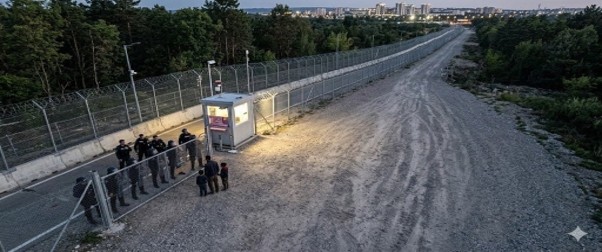
Pushbacks, or the forcible return of migrants and asylum seekers at borders without individual assessment, have become a central feature of migration control in Europe. While countries often rationalize these practices in terms of sovereignty and security, border management is clearly constrained by international law. Pushbacks cannot be justified under international law because they regularly breach fundamental legal obligations that continue to apply even during periods of crisis.
The core obligation of this framework is the principle of non-refoulement, which prohibits the return of persons to countries where they may be persecuted, tortured, or subjected to inhuman or degrading treatment. It is widely accepted as a cornerstone of refugee and human rights law. In practice, however, pushbacks undermine this by preventing proper assessment of individual protection needs. As Goldner Lang and Nagy (2021) show, deterrence-oriented border practices in the European Union can effectively prevent entry to asylum procedures. Likewise, Moraru (2022) shows that pushbacks are not isolated incidents, but systematic practices, incompatible with international legal obligations.
Pushbacks also breach the prohibition of collective expulsion, which requires every removal decision to be based on an individual examination of the person’s circumstances. Without these safeguards, removal decisions lack both procedural fairness and legal legitimacy. Allinson (2025) shows that recent legal developments increasingly treat pushbacks as violations of fundamental rights because they remove access to due process, supporting that pushbacks are not legally defensible border measures, but practices that directly conflict with established legal standards.
Despite this, countries continue to defend pushbacks by referring to national security and the need to control irregular migration. Research on the Poland-Belarus crisis shows how governments use security-based narratives to justify restrictive measures, even when those measures clash with legal obligations. As Bodnar and Grzelak (2023) note, a clear gap remains between the law as formally recognized and the practices adopted by states.
These justifications have been reinforced solely by the hybrid threat framing of migration. But this story does not change the legal framework. States remain bound by their human rights obligations even in situations of external pressure, as highlighted by Pūraitė and Seniutienė (2025). Security concerns are not permitted to override absolute obligations such as non-refoulement.
Comparative research points to the same conclusion in different contexts. Studies of border practices in the Mediterranean show that pushbacks cannot be reconciled with the duty to protect fundamental rights, confirming that the problem is structural rather than isolated, as demonstrated by Perišić and Ostojić (2022). The continued use of pushbacks also reflects a wider shift in migration governance. As Karamanidou and Kasparek (2022) explain, this normalization may blur the line between legality and illegality, but it does not make such practices lawful.
International law does not justify pushbacks. States present them as necessary responses to security challenges, but at their core they are in direct contradiction to binding legal principles. The persistence is not a result of legal ambivalence but of a conscious abandonment of established standards, which calls into question the credibility of the European legal order.
Jaber Hayder, Highlight 20/2026: Can Pushbacks Ever Be Justified Under International Law?, 22 June 2026, available at www.meig.ch
The views expressed in the MEIG Highlights are personal to the authors and neither reflect the positions of the MEIG Programme nor those of the University of Geneva