
Highlight 2/2026: The return of Syrian refugees: implications for human rights and refugee protection
Arnold Ateka, 20 January 2026
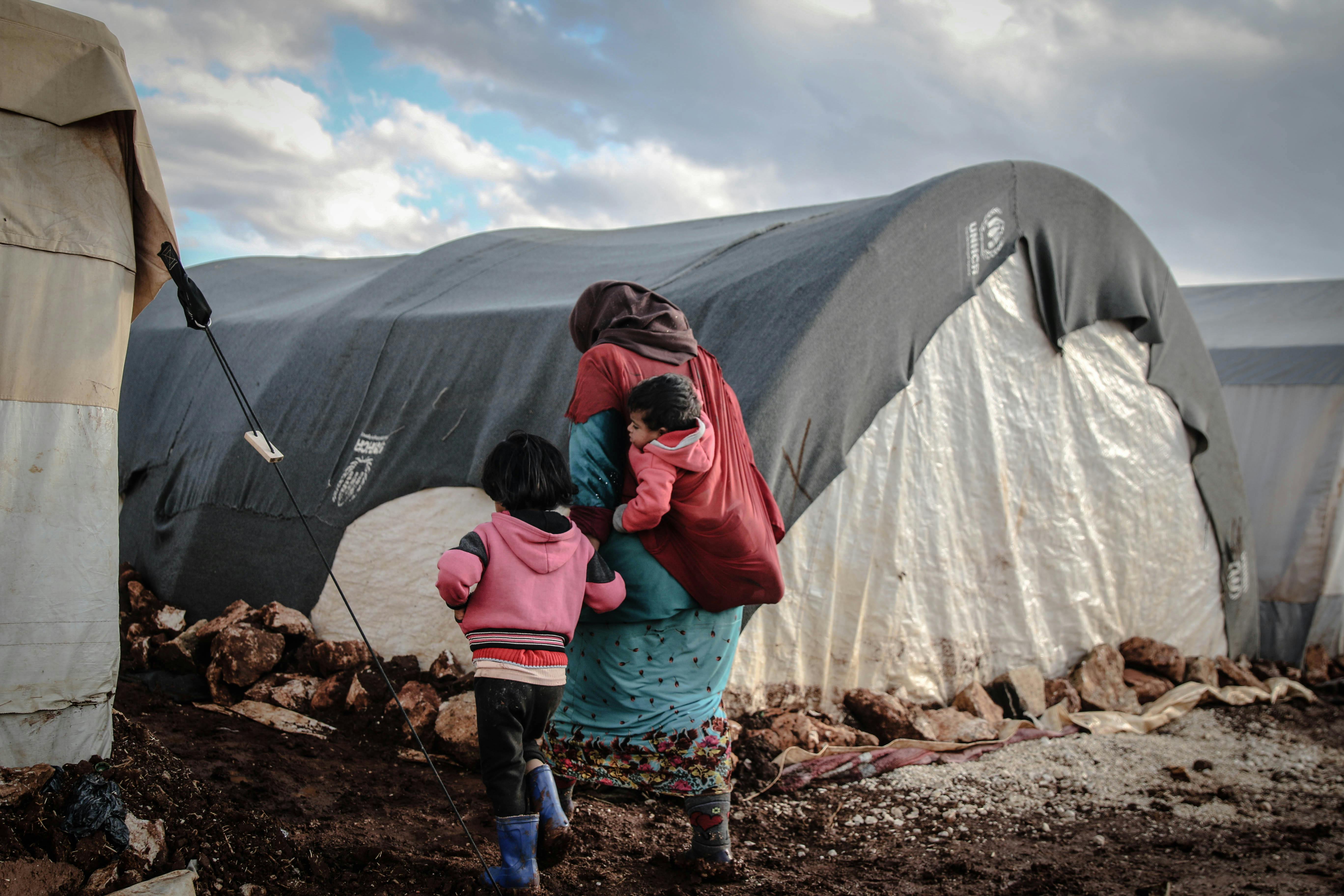
The push to return Syrian refugees is not only premature; it is becoming a stress test for the credibility of the entire international protection regime, exposing a widening gap between formal norms and political practice. The central question is no longer whether Syria is “safe,” but whether states are willing to reinterpret protection standards to make it appear so.
Are safety, dignity, voluntariness: stretched concepts? The impression of voluntary, safe and dignified return has become increasingly elastic, allowing states to certify returns that clearly fall short of these benchmarks. When refugees choose to return after years of legal precarity, raids, deportation threats, and destitution in host states, the element of voluntariness becomes deeply compromised, revealing how structural coercion can masquerade as choice.Similarly, safety is often reduced to the absence of large-scale front-line hostilities, sidelining the reality of intelligence surveillance, arbitrary detention, torture, and enforced disappearances targeting returnees. This functional narrowing of “safety” normalizes a situation in which systemic repression is treated as an acceptable background condition rather than a red line for repatriation.
Is non-refoulement under quiet erosion? Formally, non-refoulement remains a cornerstone of refugee and human rights law and is widely characterized as a norm of customary international law. Yet in practice, the principle is increasingly re-engineered through legal and policy procedures that preserve its language while undermining its effect, such as labeling Syrians as “irregular migrants” rather than refugees, or using security narratives to justify collective expulsions.
This silent erosion shifts non-refoulement from a hard prohibition into a negotiable standard subject to political calculus, particularly where host states feel abandoned by international burden sharing. The danger is not only for Syrians: precedents set in this context may be invoked in future crises to justify returning people to countries that remain structurally unsafe but are politically inconvenient to host.
The politics of Syrian returns also reveal sophisticated patterns of responsibility-shifting. Host countries portray themselves as victims of an overstretched humanitarian burden, insisting that the real responsibility lies with the country of origin to receive its citizens and with donor states to fund reconstruction. At the same time, countries of origin and their allies argue that if the international community deems Syria unsafe, it is obstructing reconstruction and sovereignty, thereby perpetuating displacement.
This mutual moral outsourcing creates a perverse equilibrium in which no actor assumes full responsibility for creating conditions of safe return, but all can justify policies that increase pressure on refugees to leave. The result is a de facto system of containment and recycling of vulnerability, where the same individuals oscillate between countries without ever achieving durable protection.
Return policies are also entangled with geopolitical efforts to normalize relations with Damascus. Presenting certain areas as “safe” and organizing pilot returns allows states to signal that the conflict is entering a post-war phase, even when core patterns of repression remain intact. Refugees thereby become instruments in broader strategies of normalization: their physical presence in host states is read as evidence of ongoing crisis, while their return is framed as proof of stability and reconciliation.
This instrumentalization has a corrosive effect on human rights discourse. Instead of asking whether returns meet established protection thresholds, debates shift to whether return can serve as leverage for political deals, reconstruction funding, or domestic electoral gains. Refugee agency and rights are thus subordinated to state-centric calculations, in tension with the foundational premise of refugee protection as an individual, rights-based safeguard.
The Syrian case invites a deeper re-examination of the classical triad of durable solutions—repatriation, local integration, and resettlement. In a context of long-term authoritarian entrenchment, fragmented territorial control, and regional fatigue, large-scale safe return may be structurally improbable for years, if not decades. Clinging to repatriation as the default solution risks generating policy fictions that legitimize premature returns and chronic precarity.
Thinking outside the traditional frame would mean treating protracted exile not as a temporary anomaly but as a predictable feature of contemporary conflict, and designing legal and political architectures accordingly: more ambitious pathways for local integration, mobility-based solutions (labor, education, and family channels), and forms of partial or phased return that include robust monitoring and the right to re-seek protection if conditions deteriorate. Such innovations would shift the focus from ending displacement on paper to redistributing and institutionalizing protection responsibilities in ways that reflect the long horizon of today’s conflicts.
In that sense, the return of Syrian refugees is less a discrete policy issue than a prism through which the future of the international refugee system is being refracted: if protection can be redefined downwards here, it can be redefined downwards anywhere.
Arnold Ateka, Highlight 2/2026: The return of Syrian refugees: implications for human rights and refugee protection, 20 January 2026, available at www.meig.ch
The views expressed in the MEIG Highlights are personal to the authors and neither reflect the positions of the MEIG Programme nor those of the University of Geneva.